Creating a will online in South Africa is entirely possible, but the critical point is this: an online process is only legally useful if the final document is executed in a way that complies with South African law. Many people think a digital questionnaire or PDF alone makes a will valid. It does not. The will must still satisfy the formalities set out in the Wills Act 7 of 1953. If those formalities are missed, your family may be left arguing over whether your wishes can be enforced at all.
That is why the smartest way to use an online will service is to treat it as a drafting and guidance tool, not as a shortcut around legal requirements. Online drafting can be efficient, affordable, and convenient. It can help you organise your wishes, reduce delays, and avoid the cost of starting from a blank page. But the legal force comes from the content of the will and the way it is signed and witnessed.
The legal requirements under the Wills Act 7 of 1953
Section 2 of the Wills Act sets out the key formalities. In practical terms, a South African will must be in writing, signed at the end by the testator or by another person in the testator's presence and by direction, and that signature must be made or acknowledged in the presence of two or more competent witnesses who are present at the same time. Those witnesses must then attest and sign the will in the presence of the testator and of each other. If the will has more than one page, each page other than the last should also be signed appropriately.
Those requirements explain why an online process cannot be fully virtual in the ordinary sense. You may draft the will online, but unless the document is printed and signed correctly in front of two competent witnesses, it is vulnerable. South African law is concerned with the execution ceremony, not only the drafting stage.
The witness rules also matter. Witnesses should be independent adults who can give evidence in court if necessary. As a risk-management measure, they should not be beneficiaries under the will, and neither should their spouses. Even where the law may save a bequest in some circumstances, using beneficiaries as witnesses is an avoidable mistake. Good online services warn users about this clearly.
What an online will service can do well
A well-designed online process can make estate planning far less intimidating. It can guide you through family information, beneficiary choices, guardianship wishes, the appointment of an executor, and the creation of a testamentary trust for minor children if needed. It can also help you think about residue clauses, alternate beneficiaries, and what should happen if a beneficiary dies before you.
For many South Africans, the hardest part of making a will is not the legal complexity. It is getting started. Online drafting helps because it turns a vague intention into a structured sequence of decisions. Instead of saying, "I really need to do my will one day," you are prompted to answer practical questions about your spouse, children, assets, and wishes. That momentum is valuable.
Online drafting is also useful for people who want a first will quickly and then plan to review it with an adviser if their circumstances become more complex. That approach can be far better than remaining intestate for years.
Prepare before you start drafting
Even the best online platform cannot make decisions for you. Before you begin, collect the information you will need. Make a list of your close family members, dependants, and the people you may want to appoint in trusted roles. Think carefully about who should benefit, who should administer the estate, and who should care for your minor children if both parents die.
You should also list your major assets and liabilities. You do not need a forensic inventory for the will itself, but you do need enough clarity to understand the consequences of your choices. The family home, vehicles, investments, business interests, loan accounts, and life policies often raise the biggest planning questions. If an asset passes by beneficiary nomination or through a retirement fund distribution process, your will may not control it directly, but you still need to know how the pieces fit together.
Finally, decide whether any beneficiary requires protection rather than an immediate outright inheritance. Minor children, dependants with disabilities, or beneficiaries who need controlled support may be better served through a trust structure written into the will.
What to include in your online will
A properly drafted will should do more than state who gets the house. At a minimum, it should identify you clearly, revoke earlier wills if appropriate, appoint an executor, and state how your estate or the residue of your estate must devolve. If you have children, it should address guardianship wishes and the management of any inheritance that may pass to them.
Beneficiaries and inheritances
Be specific about who must inherit what. If you are making particular bequests, describe the asset clearly enough to identify it. Just as importantly, include a residue clause so the balance of your estate does not accidentally fall outside the will. Many disputes arise not because people forgot to leave the house to someone, but because they failed to deal properly with the rest of the estate.
Executor appointment
Your executor is the person or institution appointed to wind up the estate, deal with the Master of the High Court, gather assets, settle liabilities, and distribute inheritances. Choose someone capable, trustworthy, and likely to cope with administration. In some cases a family member is suitable; in others, a professional executor is more realistic. The important thing is to understand the role rather than naming someone casually.
Guardianship for minor children
Your will is the natural place to state who you want to care for your minor children if you die while they are still dependent. While guardianship can involve broader legal considerations and court oversight, the nomination in your will remains highly influential. Parents often spend more time thinking about assets than about who will raise their children. In reality, guardianship may be the most important decision in the document.
Trust provisions for children or vulnerable beneficiaries
If minor children are likely to inherit, consider whether the will should create a testamentary trust. This allows trustees to use funds for education, maintenance, medical care, accommodation, and other needs until the children reach an age you specify. Without this planning, inheritances for minors can become administratively awkward and less tailored to the child's best interests.
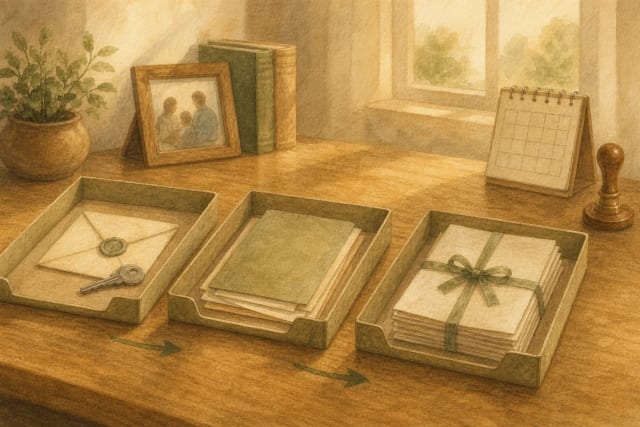
A practical step-by-step online will process
- Choose a South Africa-specific service: avoid foreign templates that do not reflect local law or practice.
- Complete the personal and family questionnaire: ensure names and relationships are accurate.
- Set out your beneficiaries and fallback beneficiaries: think through what happens if someone dies before you.
- Nominate an executor and, where relevant, trustees and guardians: choose people with capacity, not only emotional closeness.
- Review the draft carefully: names, ID details, spelling, percentages, and alternate clauses all matter.
- Print the final version: do not assume an electronic file alone is enough.
- Arrange a proper signing ceremony: sign in the presence of two competent witnesses who are present together.
- Ensure witnesses sign correctly: they should sign in your presence and in the presence of each other.
- Store the original safely: the signed original is what your family will need later.
That last step is often overlooked. An unsigned draft in your inbox is not a valid will. A signed will nobody can find is also a problem. Online drafting solves the beginning of the process; you must still complete the end properly.
Common pitfalls with online wills
The biggest pitfall is assuming convenience removes formalities. It does not. Another frequent problem is rushing through a questionnaire without considering alternate outcomes. For example, if you leave everything to your spouse but say nothing about what happens if your spouse dies before you, the plan may fail at exactly the wrong moment.
People also make mistakes by using witnesses incorrectly, signing on different days, adding handwritten changes after signature, or printing a new version without destroying the old one. Amendments to a will have their own formal requirements. If you make informal edits later, you may create inconsistency rather than clarity.
Another risk is using wording that is too vague for your circumstances. Blended families, customary and religious family structures, maintenance obligations, foreign assets, and business interests often need more careful drafting than a simple online questionnaire can provide unaided. In those cases, an online draft may still be useful, but it should be reviewed by a professional.
Safekeeping matters as much as drafting
Once your will has been signed correctly, keep the original in a place where it is safe but accessible. Tell a trusted person where it is stored. If your adviser or will-drafting provider offers safekeeping, ask how the original is tracked and how your family can retrieve it. A scanned copy is helpful for reference, but the original signed document is usually what matters most in administration.
You should also keep supporting records outside the will itself. Maintain a simple note of your assets, liabilities, policy details, and important contacts. This note does not replace the will, but it makes the executor's job materially easier.
When should you update an online will?
Update your will after marriage, divorce, the birth or adoption of a child, the death of a beneficiary or nominated executor, a major property purchase, the start or sale of a business, or any major change in financial position. If your estate has grown or your family has become more complex, a basic first will may no longer be enough.
As a rule, review the document regularly even if nothing dramatic has happened. People often discover that their will still refers to an old address, a former partner, or an executor who emigrated years ago. Small inaccuracies can become major administration problems later.
Why a free will drafting service can still be valuable
Affordable access matters because too many South Africans still die without wills. A reputable free will drafting offer can remove the cost barrier that keeps people procrastinating. The real question is not whether the first draft is free. It is whether the service is South Africa-specific, explains the signing process properly, and gives you a document that reflects your family circumstances.
Wills & Trust's free will drafting can therefore be a practical entry point for families who need to get a valid will in place quickly and then review more advanced planning where necessary. The right starting point is almost always better than no plan at all.
If you are ready to draft a will online, use a process built for South African law, follow the signature formalities carefully, and get advice if your family or asset structure is complex. To start with a guided drafting process or ask for help reviewing your will, contact Wills & Trust.